


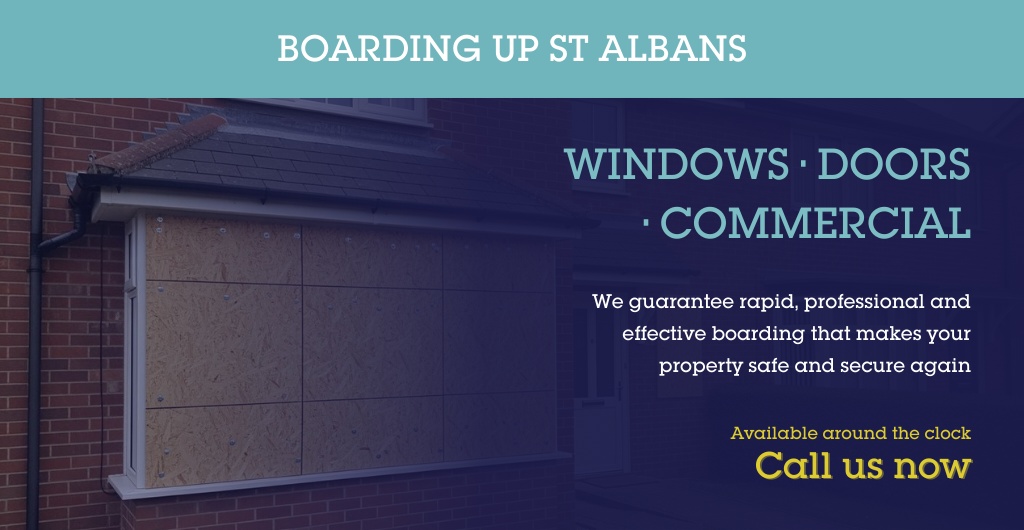
Insurance Claims Support for Boarding Up in St Albans (AL1–AL10)
When your property has been damaged—whether that’s a smashed window, a forced door, or a shopfront attack—the insurance side can feel like another problem on top of an already stressful situation. Our job at Boarding Up St Albans is to secure the building quickly and professionally, then provide the documentation insurers usually ask for.
If you need urgent help, we can make safe and secure the property first, then you can deal with the claim details once things are calm. Need emergency boarding up now? Call 01727 326 204 or email [email protected].
We’ve been trading for 10+ years across St Albans and the AL postcodes, we’re fully insured, and our technicians are DBS-checked.
Where we fit in the insurance process (and where we don’t)
It helps to be clear about roles, especially when things are moving quickly.
What we do:
- Attend to secure property after damage (emergency boarding up or planned securing)
- Carry out temporary boarding for broken windows, doors, shopfronts, roofs and skylights
- Offer security upgrades where appropriate (for example, a temporary steel door on a badly damaged entrance)
- Provide clear paperwork and evidence to support your claim (details below)
What we don’t do:
- We’re not loss adjusters and can’t approve or reject claims
- We don’t advise on policy wording or legal responsibility
- We don’t carry out full reinstatement works (e.g., glazing replacement, joinery rebuilds, fire/soot remediation). We focus on securing the opening and reducing risk.
If you’re unsure whether you should go ahead, call us and we’ll talk through the situation and explain the options before any work starts—especially if frames are badly damaged and non-destructive methods might not be possible.
Step-by-step: making a claim after boarding up
Every insurer is slightly different, but most claims follow the same basic pattern.
-
Make the scene safe
- If there’s a crime in progress or you feel threatened, call 999.
- For non-emergency police attendance (after a break-in, for example), follow police guidance and keep any reference number.
-
Prevent further damage
- Insurers usually expect you to take reasonable steps to stop the situation getting worse (weather ingress, repeat entry, vandalism).
- This is where emergency boarding up is normally appropriate. If you need help now, use our emergency boarding up page and call directly.
-
Document what you can (only if it’s safe)
- Take a few photos of the damage before anything is moved.
- Don’t touch potential evidence after a burglary unless advised by police.
-
Call your insurer as early as possible
- Ask whether they want to appoint an approved contractor for permanent repairs.
- Ask how they want invoices and photos provided (email portal, claim handler, etc.).
-
Keep all paperwork together
- Police reference number (if applicable)
- Our invoice and work statement
- Photos of damage and the secured result
- Any correspondence about authority to proceed
What insurers usually need from a boarding-up contractor
We aim to provide the practical evidence that helps claims progress without back-and-forth. Depending on the job, you’ll typically receive:
- Itemised invoice showing what was done and the address attended
- Work summary / statement describing the damage and how it was secured
- Time-stamped photos (where possible) showing before/after the boarding-up work
- Notes on materials used (e.g., 18mm exterior-grade plywood for vulnerable openings, or 12mm OSB for smaller/low-risk areas where appropriate)
- Notes on fixings used (e.g., anti-tamper fixings where the board edges are accessible from outside)
If something about the opening makes a standard approach unsuitable—such as a crumbling timber frame, cracked masonry, or unsafe access—we’ll explain the constraints and confirm a safe method before proceeding.
The difference between “emergency make-safe” and permanent repairs
A common cause of claims frustration is misunderstanding what “make safe” means.
Emergency make-safe (what boarding up is)
Boarding up is usually a temporary security and weather-risk measure. It’s designed to:
- Reduce the chance of repeat entry
- Stop wind and rain getting into the property
- Keep the site safe for occupants and passers-by
- Buy you time to organise permanent repairs properly
This is exactly what our core services are built for, including window boarding in St Albans and door boarding.
Permanent repairs (what comes next)
Permanent repairs might include:
- New glazing units or shopfront glazing
- Door replacement or frame rebuild
- Brickwork/masonry repairs after impact
- Roof rebuild or leadwork repairs after storm damage
Your insurer may send their own contractor, ask you to obtain quotes, or approve repairs after assessment. We can secure the site in the meantime so you’re not left exposed.
Common claim scenarios we see in St Albans and the AL postcodes
We support customers across AL1–AL10. The situation is rarely “just a broken pane”—it’s usually tied to an incident that needs quick action.
Burglary and attempted break-ins
Forced doors and smashed windows often require urgent securing, especially if the property will be unattended overnight. If this is your situation, see burglary repairs and boarding up.
Tip: Keep your police reference number handy—insurers frequently ask for it.
Vandalism and smashed windows
From a single smashed window to repeated damage at vulnerable points, boarding up reduces the chance of escalation. Related help: vandalism repair and boarding up.
Storm damage and wind-blown debris
If glazing has been compromised or roof openings are letting water in, quick action can reduce secondary damage (plaster, electrics, flooring). See storm damage boarding up and, where relevant, roof boarding.
Accidental impact (vehicles, falls, site incidents)
Impact damage can leave dangerous edges and unstable frames. We can make safe and secure, and we’ll note if the structure looks too compromised for standard fixings. See accident damage securing.
Fire damage
We can secure openings after fire service attendance, but smoke/odour remediation isn’t our scope—we focus on securing the property. See fire damage securing.
How we approach insurance-friendly boarding up (without overselling it)
Insurers and property managers generally want three things: the property secured, the method to be reasonable, and the paperwork to be clear.
Our approach typically includes:
- Choosing the right sheet material for the risk and opening size
(e.g., sturdy exterior-grade plywood where security is the priority) - Fixing boards in a way that’s hard to remove from outside
(anti-tamper fixings and correct edge coverage) - Avoiding unnecessary damage where possible
(we aim for secure fixing points that don’t create extra repair work) - Communicating clearly if the frame or surrounding structure is too damaged
(in those cases we explain options before proceeding)
For commercial premises—especially where glazing is large—we may recommend shopfront boarding rather than a lighter domestic-style approach.
Do I need authorisation from my insurer before you attend?
Not always—but it depends on your policy and circumstances.
- If the property is insecure or exposed to weather: it’s usually reasonable to proceed with a make-safe to prevent further damage.
- If the damage is minor and can wait safely: it may be worth calling your insurer first to confirm their process.
If you call us, we’ll talk through what’s happened, what the risks are if it’s left open, and whether boarding up is appropriate tonight or can be scheduled.
Tips to help your claim go smoothly
A few simple actions can reduce delays:
- Take photos before boarding up (only if safe)
- Keep damaged parts if advised (e.g., locks) — but don’t interfere with police evidence
- Record who you spoke to at the insurer and the time/date
- Ask your insurer about “trace and access” if the damage relates to water ingress (policy-dependent)
- Don’t throw away receipts for emergency measures (including boarding up)
If you’re managing a site on behalf of someone else (landlord, facilities manager, letting agent), keep a short incident log and ensure access arrangements are clear.
Insurance Claims FAQs (St Albans & AL postcodes)
Will my insurance cover boarding up in St Albans?
Many policies cover reasonable emergency measures to secure the property after an insured event, but it depends on your cover and excess. We can provide the paperwork insurers commonly request, but we can’t confirm cover on their behalf.
What should I tell my insurer when I need emergency boarding up?
Explain what happened (burglary, vandalism, storm damage, accidental impact), what’s been damaged (window/door/shopfront/roof opening), and why the property is currently insecure. If you have a police reference number, provide it.
Do you provide photos and a written statement for my claim?
Yes—where possible we provide time-stamped photos and a clear work summary describing what was secured and how. This supports claims and property management reporting.
Can you board up a door that won’t close after a break-in?
Yes. Depending on the condition of the frame, we may use boarded protection or discuss options such as a more robust temporary solution. For more detail, see door boarding.
The window frame is damaged—can you still board it up?
Often, yes. If there isn’t enough sound structure for standard fixing, we’ll explain the safest approach before doing anything. In some cases, a different fixing method (or a more robust temporary solution) is needed.
Will boarding up cause more damage that my insurer won’t like?
Our aim is to secure the opening using appropriate fixing points and methods that don’t create unnecessary additional damage. However, if the surrounding structure is already compromised, we’ll be transparent about what’s possible and why.
I’m a landlord/managing agent—can you send paperwork suitable for my records?
Yes. We regularly support landlords and property managers with clear invoices and documentation for internal records as well as insurance submission. You can also review our general approach on the pricing page (we don’t publish fixed prices, but we explain the cost factors).
Can you liaise directly with my insurer?
We can provide information about what we did and supply documentation you can forward, but we don’t act as your loss adjuster. Most insurers prefer to communicate with the policyholder or appointed representative.
Ready to secure the property and get the paperwork you need?
If you need urgent help after damage, we’ll focus on making the site safe and securing the opening—then provide clear documentation that insurers typically ask for.
Need help now? Call 01727 326 204 or email [email protected].
