


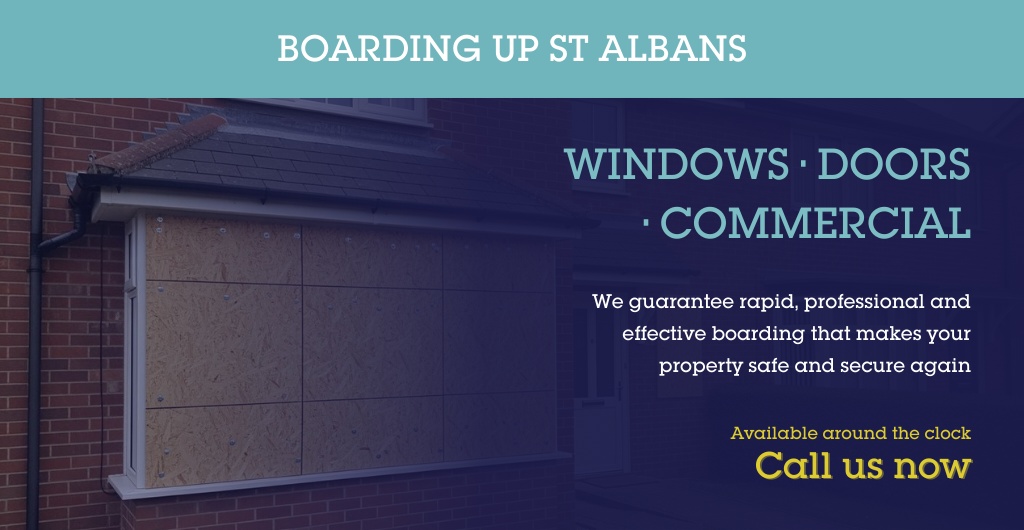
FAQs — Boarding Up in St Albans (AL1–AL10)
When you’re dealing with a smashed window, a forced door, or a property that can’t be left open to the weather, you usually need clear answers fast. Below are the questions we’re asked most often about boarding up in St Albans and across the AL postcode area—what happens when you call, what we use, how insurance normally works, and what you can do straight away to stay safe.
If you need urgent help, you don’t have to read everything first. Call us for emergency boarding up in St Albans on 01727 326 204.
Quick answers (if you’re in a hurry)
- Yes, we can help out of hours — We offer 24/7 boarding up for urgent situations. See: emergency boarding up.
- We secure broken windows, doors, shopfronts and roofs — including temporary solutions where repairs can’t happen immediately. Explore: our services.
- We don’t promise fixed arrival times — but we prioritise urgent calls and will give you a realistic ETA on the phone.
- Insurance often covers “make safe” work — and we provide documentation insurers typically ask for. See: insurance claims help.
Frequently asked questions
Do you cover my area in St Albans?
Yes. We cover St Albans and the wider AL postcode area (AL1–AL10), including residential streets, retail areas, business parks and rural properties around the district.
If you’re not sure whether you’re within our coverage, check our areas we cover page or call 01727 326 204 and we’ll confirm.
Can you board up a broken window tonight?
In many cases, yes. If you’ve got a smashed window and the property can’t be left insecure, we can often attend out of hours to make safe and secure property until glazing repairs are arranged.
For urgent call-outs, start here: 24 hour emergency boarding up in St Albans.
What should I do immediately after a window is smashed?
If it’s safe to do so, the priority is preventing injury and stopping access:
- Keep people away from the opening (and any glass on the floor).
- Don’t touch loose shards—especially in shopfronts or large panes.
- If there’s a suspected crime, call the police first and keep your reference number.
- Take photos for your insurer (only if it’s safe).
- Call us to board up broken window openings and prevent further damage: 01727 326 204.
If you know you specifically need help with windows, see window boarding in St Albans.
Can you board up a door after a break-in?
Yes. If you need to board up door damage after forced entry, we can secure it using appropriate fixings and materials based on the door type and frame condition.
If the frame is too damaged for a straightforward, non-destructive solution, we’ll explain the options before proceeding. For more detail on methods, see door boarding.
For burglary-specific guidance, read burglary repairs and boarding up.
Do you offer shopfront boarding up for businesses?
Yes. We provide shopfront boarded up solutions for commercial glazing and frontage damage, including larger openings and higher-risk locations where the premises may be unattended overnight.
We aim to keep things tidy and practical—secure fixings, sensible panel joins, and a clear plan for temporary security until the glass contractor attends. Learn more about shopfront boarding.
Do you board up roofs and skylights?
Yes, where it’s safe and appropriate. Roof boarding and securing damaged skylights is often about stopping weather ingress as quickly as possible. Access, height, and the condition of the surrounding structure all affect what can be done immediately.
We’ll talk you through what’s realistic when you call. For more information, see roof boarding.
What materials do you use — plywood or OSB?
We use materials that are fit for the job and the opening size:
- 18mm exterior-grade plywood is commonly used for stronger, more secure coverage—especially for ground-floor windows, doors and shopfronts.
- OSB (often 12mm for smaller openings) may be suitable in certain lower-risk or smaller window situations.
The choice depends on risk level (vacant vs occupied), exposure to weather, fixing points available, and whether the goal is short-term temporary boarding or a more robust medium-term solution.
How do you fix the boards in place?
We use methods that suit the surface and the level of risk. Common approaches include:
- Through-bolting (where appropriate) for a strong, secure hold on larger openings
- Anti-tamper fixings to reduce the risk of removal from outside
- Fixing patterns that avoid unnecessary damage while still creating a secure barrier
If the property is occupied and you’re concerned about internal access or ventilation, tell us when you call—we’ll plan the safest, most practical solution.
Will boarding up damage my window frame or brickwork?
It can, but we try to minimise it. Securing a property properly sometimes requires fixings into suitable structural points—especially after a break-in or impact where the frame is already compromised.
Where a non-destructive method is possible, we’ll use it. If it isn’t (for example, if timber is split, masonry is loose, or the opening is irregular), we’ll explain why and what the alternatives are before starting.
Can you “make safe” without fully boarding up?
Sometimes. “Make safe” can mean different things depending on the damage:
- Removing immediate hazards (e.g., loose, dangerous shards where safe to do so)
- Securing an opening to prevent access
- Providing a temporary cover to reduce weather ingress
If full boarding isn’t necessary (or isn’t possible without additional work), we’ll tell you. In many cases, however, boarding is the most reliable way to secure property quickly.
Is boarding up covered by insurance?
Often, yes—especially after burglary, vandalism, storm damage, impact, or fire-related damage where the insurer expects the property to be secured promptly to prevent further loss.
We’re not loss adjusters and can’t approve claims, but we do provide the kind of documentation insurers typically request (such as a clear description of works, itemised invoice, and photo evidence). See our guidance on insurance claims.
What information do you need when I call?
To help us assess the job quickly, it’s useful to know:
- The postcode (AL1–AL10) and whether access is straightforward
- What’s damaged (window, door, shopfront, rooflight)
- Whether the property is occupied or vacant
- Approximate size/number of openings
- Whether police, fire service, or a managing agent is involved
- Any immediate hazards (loose glass, unstable frames, flooding)
If you can safely send photos, that can help us prepare materials—but don’t delay calling if the property is exposed.
Do you work with landlords, letting agents, and facilities managers?
Yes. We regularly help landlords and property managers secure buildings between tenancies, after forced entry, or when a unit needs temporary security pending repairs.
If you manage multiple sites or require documentation for internal reporting, tell us—we can provide clear work statements and supporting photos where appropriate.
For relevant context, you may find these pages useful:
Can you secure a property that’s going to be empty for weeks?
Yes. If a property will be vacant for an extended period, we’ll discuss options that may be more suitable than basic timber boarding—depending on risk level, location and how often the site is visited.
That might include more robust access control solutions (for example, temporary door solutions) and a plan that balances security with practical access for contractors.
Do you provide temporary fencing as well?
In some situations, yes—particularly where there’s a compromised perimeter, unsafe access, or ongoing works where controlling entry is important. Learn more about temporary fencing.
Are your technicians DBS-checked and insured?
Yes. We have DBS-checked technicians and we’re fully insured. We also have 10+ years’ trading experience, and we aim to work in a way that is safe, respectful of your property, and well-documented—especially when the situation is stressful.
Do you remove the boards later?
We can advise on the best approach depending on what happens next (glazing replacement, door repair, roof works, or reinstatement). In many cases, removal is coordinated with the repair contractor so the property isn’t left exposed again.
If you’re arranging the follow-on repairs yourself, let us know and we’ll help you plan it sensibly.
How long does boarding up take?
It depends on the size of the opening(s), access, and the condition of the structure around the damage. A single window is usually quicker than a damaged shopfront or a door with a compromised frame.
When you call, we’ll ask a few practical questions and give you a realistic idea of what to expect for your specific situation.
Can you help after storm damage, flooding, fire, or an accident?
Yes—we frequently secure properties after all of these situations, especially when openings are exposed and need immediate protection.
Useful situation pages:
- storm damage boarding
- flood damage boarding
- fire damage securing
- accident and impact damage boarding
- vandalism repairs and boarding up
What to do if you need emergency boarding up now
If you’re dealing with an exposed opening right now—broken glass, a forced door, or a damaged shopfront—the safest next step is to call so we can talk through the situation and prioritise the work.
Need help now? Call 01727 326 204 for immediate assistance.
Prefer email for non-urgent queries? [email protected]
